Test 41 · Agree/Disagree
Question
People living in the 21st century have a better quality of life than people who lived in previous times. To what extent do you agree or disagree?
Select text to highlight or save a word. Click a highlight to remove it.
There has been a noticeable leap forward in people’s lifestyles and the opportunities offered to them from the 20th to the 21st century, and we are believed to have a better standard of living now than people in the previous century. There is no denying the technological advancements this century has to offer, yet I believe that the standard of living has failed to improve.
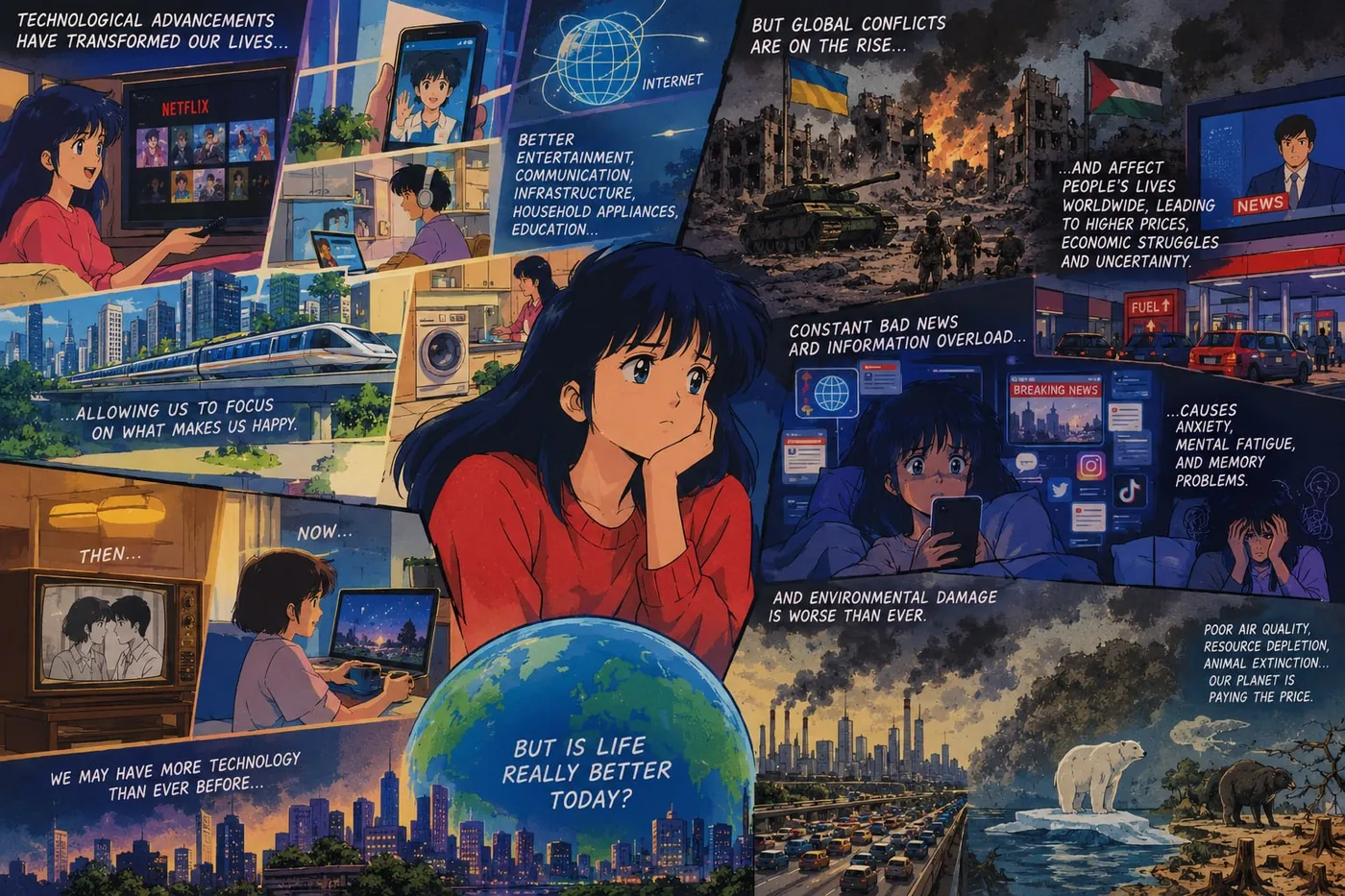
The 21st century has undoubtedly been the era of technology, as we have moved rapidly from old box TVs to watching our favourite series and movies on digital platforms. All areas of life, for example entertainment, infrastructure, household appliances and education, to name a few, have seen changes, thereby improving our experience of life. Most of these new technologies have made it possible to move away from repetitive tasks and focus on what entertains and makes us happy, allowing more time for hobbies. A simple innovation such as the internet, for instance, has completely changed our lives. People around the world can now connect and communicate regardless of geographical and cultural boundaries, and it is also easier to find information online, so the internet alone seems to be the greatest improvement contemporary people have experienced.
Despite this, technological advancement cannot overshadow the current global issues, which suggests that people are no better off today than they were in the past. International conflicts have risen in the 2020s, such as the war between Ukraine and Russia or the one in Palestine, the results of which have extended to countries far in the west and east, affecting both the social and economic aspects of their lives. The influence of these conflicts can be seen, for example, in the rising cost of fuel, as ongoing conflicts are occurring around the primary points of fuel export. People are finding it more difficult to survive in such harsh economic conditions while trying to support their families.
Another reason why life has been no better in this century is constant bad news and information overload. The rise of the internet has allowed information to spread at an unprecedented level, so people are always exposed to traumatic news from all around the world, leaving a sense that the world is falling apart. Moreover, this so-called marvellous invention of the 21st century has caused a new disease known as information overload. Social media platforms, messages from friends and family members, and news are constantly being fed into our brains, yet we were never meant to consume such a large amount of information, leading to daily issues such as exhaustion, anxiety, mental fatigue, and memory and recall problems.
Beyond global wars and psychological effects, there are environmental problems that we have to deal with at present. The 21st century has witnessed some of the most severe environmental degradation in history, if not the most severe, and its impact is felt on every continent. Of course, a large amount of resources is needed to mitigate these issues that are worsening our planet and health, although very little attention is given to them. Cities are suffering from poor air quality, as the ever-rising number of cars on the roads and continuously working factories release more and more toxic gases, not to mention the animal extinction that we humans have brought about.
In conclusion, one might understandably get excited about how advanced our lives are compared to the past, yet the severity of ongoing conflicts between nations, constant exposure to negative news, information overload causing mental problems, and environmental damage give people reasons to experience this century negatively.