Test 36 · Agree/Disagree
Question
In many countries, traditional food is being replaced by international fast food. Some people claim that this has negative effects on both families and society. To what extent do you agree or disagree?
Select text to highlight or save a word. Click a highlight to remove it.
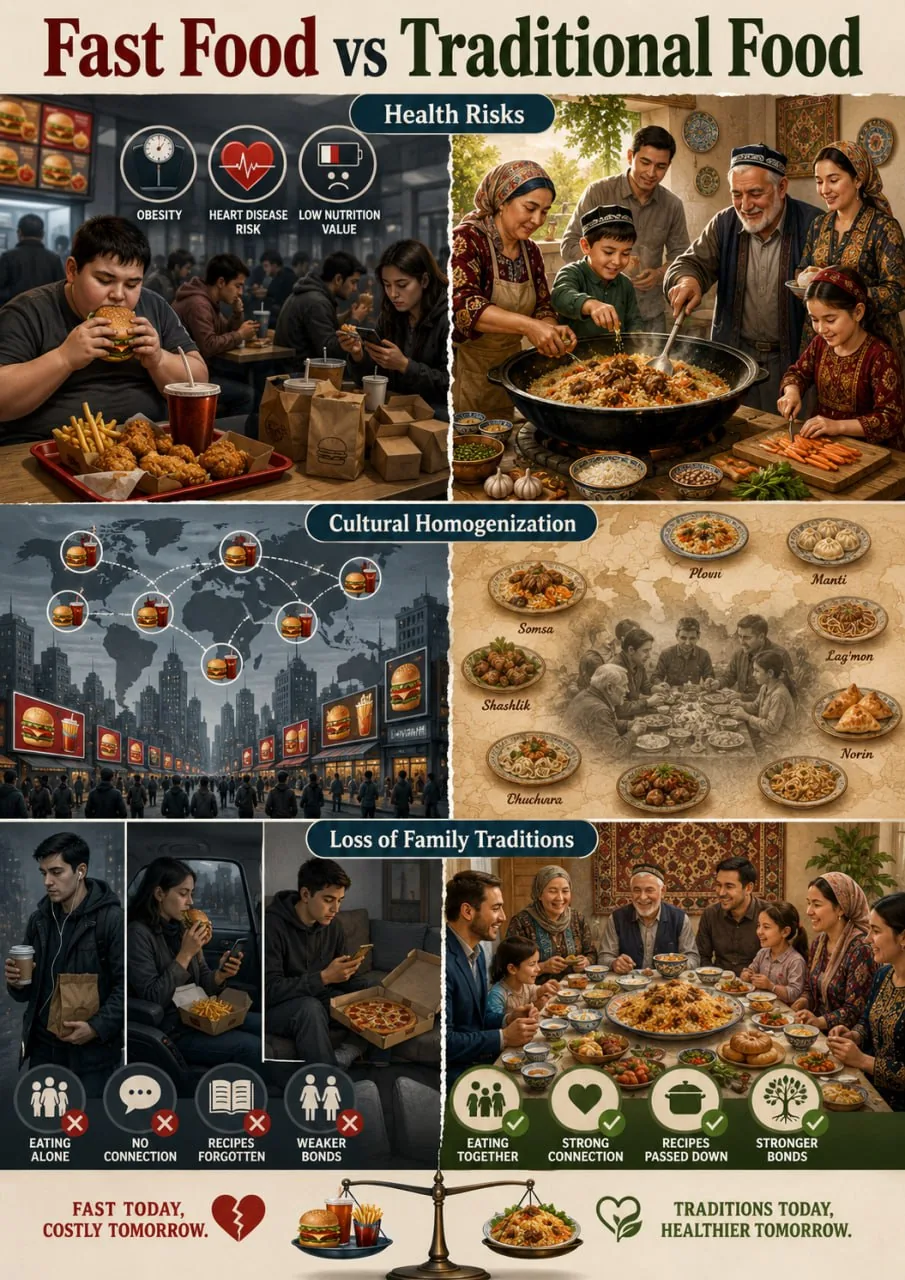
Fast food has become a mainstream choice of many people, thereby replacing traditional food around the world, which is considered to have a detrimental effect to varied aspects of our life, such as our families and society. Personally, this ideas seems to carry heavy weight because of the ways it damages the quality of food, homogenizes the food culture, and leads to the loss of family recipes.
The dominance of the fast food is particularly problematic in terms of the reduction of the quality of food. To put in simpler words, this sort of food is oftentimes produced in ways that are harmful from a health standpoint, for a number of inorganic and semi-ready products are used in the process of making, which tend to include chemicals that can damage the health or contain a high concentration of fat and ultra-processed additives. There are cases when people were reported with obesity, kidney failure, or heart attacks mainly due to the excessive consumption of fast food.
The homogenization of food also deserves attention in this regard. The strong dominance of fast food comes with a problem of losing cultural uniqueness across global cuisines, which is mainly because of the declined practises of traditional recipes, as more and more people chose to dine out rather than cook at home. This increase preference to this particular food is attributable to several factors of the fast food that appeal to many - such as, affordability, availability, convenience, and the taste that feels universally appealing to almost everyone. The success of fast food chains, therefore, has accelerated at an unprecedented level for the past few years.
The final argument in the topic is reduced familial traditions, but not the least. There are thousands of family recipes that have been practised for centuries, a sort of tradition that have grown to have an intrinsic role in the family relationship. Little moments shared during the process of cooking a certain dish and sharing it around the table is what most of the people tend to reminisce after years pass, while this practise also helps to strengthen children-parent bonds. In Uzbek families, for instance, plov is not cooked for not only eating, but also for bringing family members together. On special occasions - holidays, birthdays, and wedding parties - everyone gets together around the table, and while adults cook, they teach their young how to cook, cut carrots, or a special spice they add to make the dish more flavorsome. Over time, these moments become unique family memories, whereas losing them may weaken emotional connections between families.
In conclusion, fast food places a serious threat to global health, while it leads to poorer-quality meals and reduces family closeness. These effects of fast food, hence, make its massive spread less favorable, which is why I believe stepping away can be a step forward.
words: 474