1retail
nounthe business of selling goods to the public in shops
“The retail crash reshaped the high street.”
As shops reopen, crowds return to a high street transformed by a deeper crisis. The retail crash is less about the pandemic than about decades of economic change.
5 July 20264 min read649 words10 key words
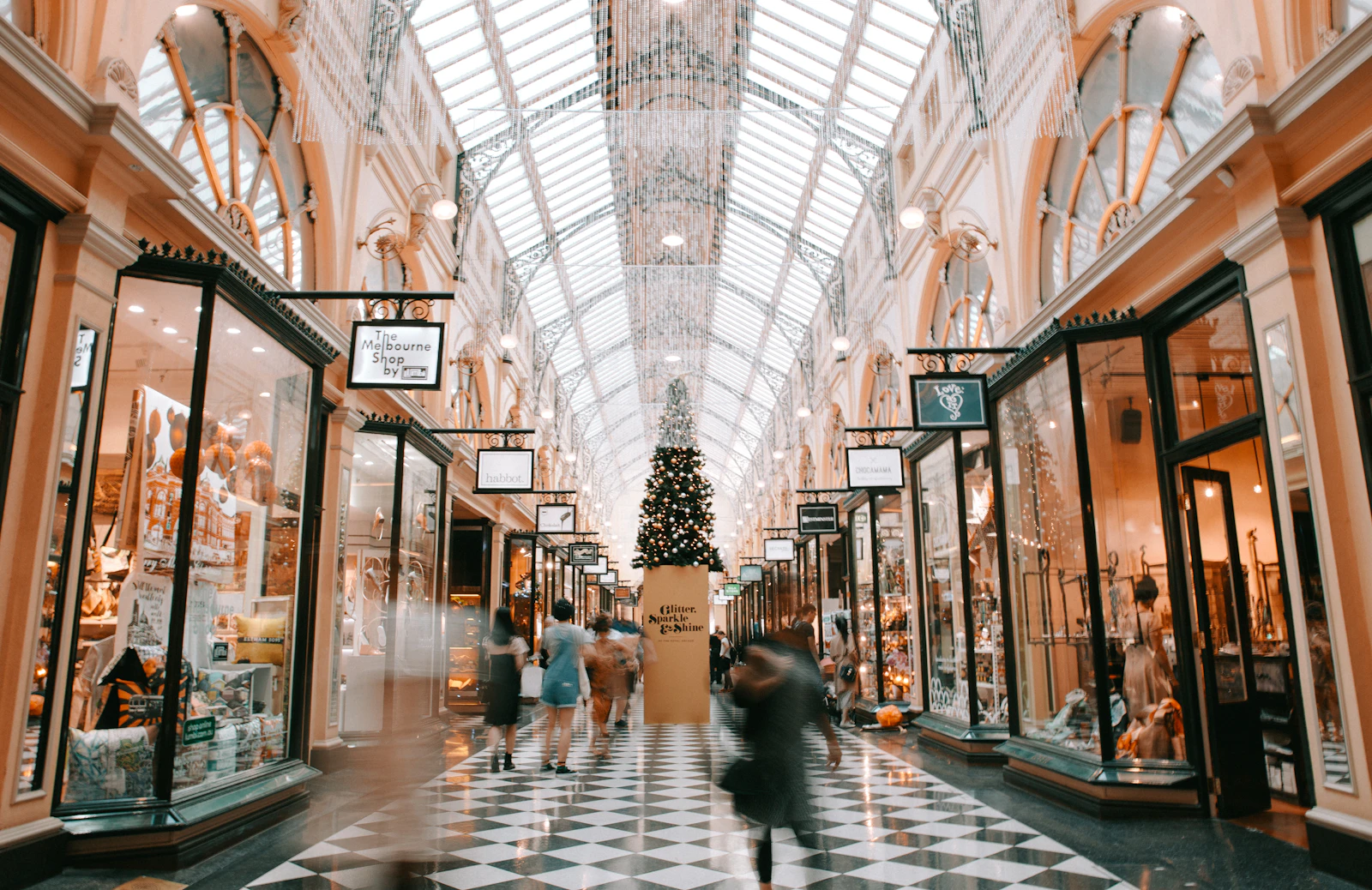
The Retail Crash Has Changed the High Street Beyond Recognition
0% · 4 min left0% · 4 min leftSelect text to highlight or save a word. Click a highlight to remove it.
As shops reopen and crowds return, the high street may look revived. But the retail crash is much more than a pandemic story — it is the acceleration of a transformation that has been under way for the best part of a decade.
The return of shoppers to reopened high streets will be celebrated as a moment of collective joy. Yet what people find may be quietly melancholy. Britain is reckoned to have lost around 17,500 chain outlets in a single year, with more than a thousand further closures announced in the following weeks and job losses running at hundreds every working day. As emergency support schemes wind down, some forecasters expect tens of thousands of empty shops. Many analysts see this not simply as a disaster but as a long-overdue reckoning: after years in which shop numbers kept rising even as online spending grew, the country, they argue, had simply built too many shops.
Familiar names have vanished. When one major fashion empire imploded, it took with it a string of brands that had once seemed to fill entire streets. An even larger gap was left by the end of a famous department-store chain that had long stood for democratic, middle-market shopping, as it vacated all of its stores — not only in big cities but in smaller towns that can least afford the loss.
Smaller cities and large towns often lack the advantages that help bigger urban centres survive: large universities, thriving creative industries, and the kind of investors drawn to repurposed spaces and salvaged decor. For these places, the loss of shops — in town centres and in the retail parks that ring them — is a heavy blow to local economies and to a community's collective sense of self-esteem. As alluring chains withdraw, discount stores expand to take their place, and the aspirational shine of the town centre dims.
All this highlights a longer error whose consequences have rippled through politics for years. From the 1980s onward, retail was promoted as a way to fill the gaps left by shut-down industries, sometimes with grim symbolism — the site of a colliery central to the miners' strike is now a vast retail park. There was always something precarious about a model in which people worked in shops to earn money to spend in other shops, a structure that risked toppling in on itself, as it partly did after the financial crash.
Now "deindustrialisation" is being followed by "deretailing", with potentially large consequences. One glimpse of a possible future can be seen abroad, where a giant online retailer buys up shopping malls and converts them into distribution centres — workplaces that are themselves at the frontier of replacing human workers with robots. But there are more hopeful experiments closer to home. Some towns are converting empty department stores into university lecture halls and training spaces, others are pursuing community-owned high streets built around local involvement, and one council has responded to decline by demolishing one side of its high street and replacing it with a park. What runs through these projects is a shared effort to shrink and rationalise old shopping districts and to push, tentatively, toward an economic future beyond simply buying and selling things.
Ultimately the retail crash is a symptom of far larger issues across the whole economy — issues that demand big answers, from reviving manufacturing through a green industrial programme to building new technical universities in the places that would most benefit. As trade returns to high streets whose decline is turning critical, that is what deserves attention: a future that is already arriving, and the hard question of what it means for the most basic aspects of how we live and work.
Based on an opinion article originally published by The Guardian.
Word bank
the business of selling goods to the public in shops
“The retail crash reshaped the high street.”
a shop or place that sells a particular product
“Thousands of chain outlets closed in a single year.”
a time when the results of past actions must be faced
“Some see the crash as a long-overdue reckoning.”
to collapse suddenly and completely
“The fashion empire imploded, closing many brands.”
not safe or stable; likely to fail
“There was always something precarious about the shift to retail.”
empty and available; not in use
“There could soon be 80,000 vacant shops.”
the decline of manufacturing industry in a region
“Deindustrialisation is being followed by deretailing.”
the process of improving and bringing new life to an area
“One town has an ambitious regeneration plan.”
to reorganise something to make it more efficient
“Towns are trying to rationalise their shopping districts.”
seeming to be everywhere
“The ubiquitous discount chain is opening new shops.”
Read aloud
/pri-KAIR-ee-us/
Syllables: pre-car-i-ous
💡 Stress KAIR.
/REK-uh-ning/
Syllables: reck-on-ing
💡 Stress REK.
/ri-jen-uh-RAY-shun/
Syllables: re-gen-er-a-tion
💡 Stress RAY.
/yoo-BIK-wi-tus/
Syllables: u-biq-ui-tous
💡 Stress BIK.
/RASH-uh-nuh-lyz/
Syllables: ra-tion-al-ise
💡 Stress RASH.