1impractical
adjectivenot sensible or realistic to do, usually because it is too difficult or expensive
“It became impractical to design chips by hand.”
≈ unworkable, unrealistic
A quantum machine has been used to invent a smaller, quieter qubit: a glimpse of computers designing their own successors.
By Matthew Sparkes23 November 20263 min read537 words12 key words
Quantum computer helps design a better quantum computer
0% · 3 min left0% · 3 min leftSelect text to highlight or save a word. Click a highlight to remove it.
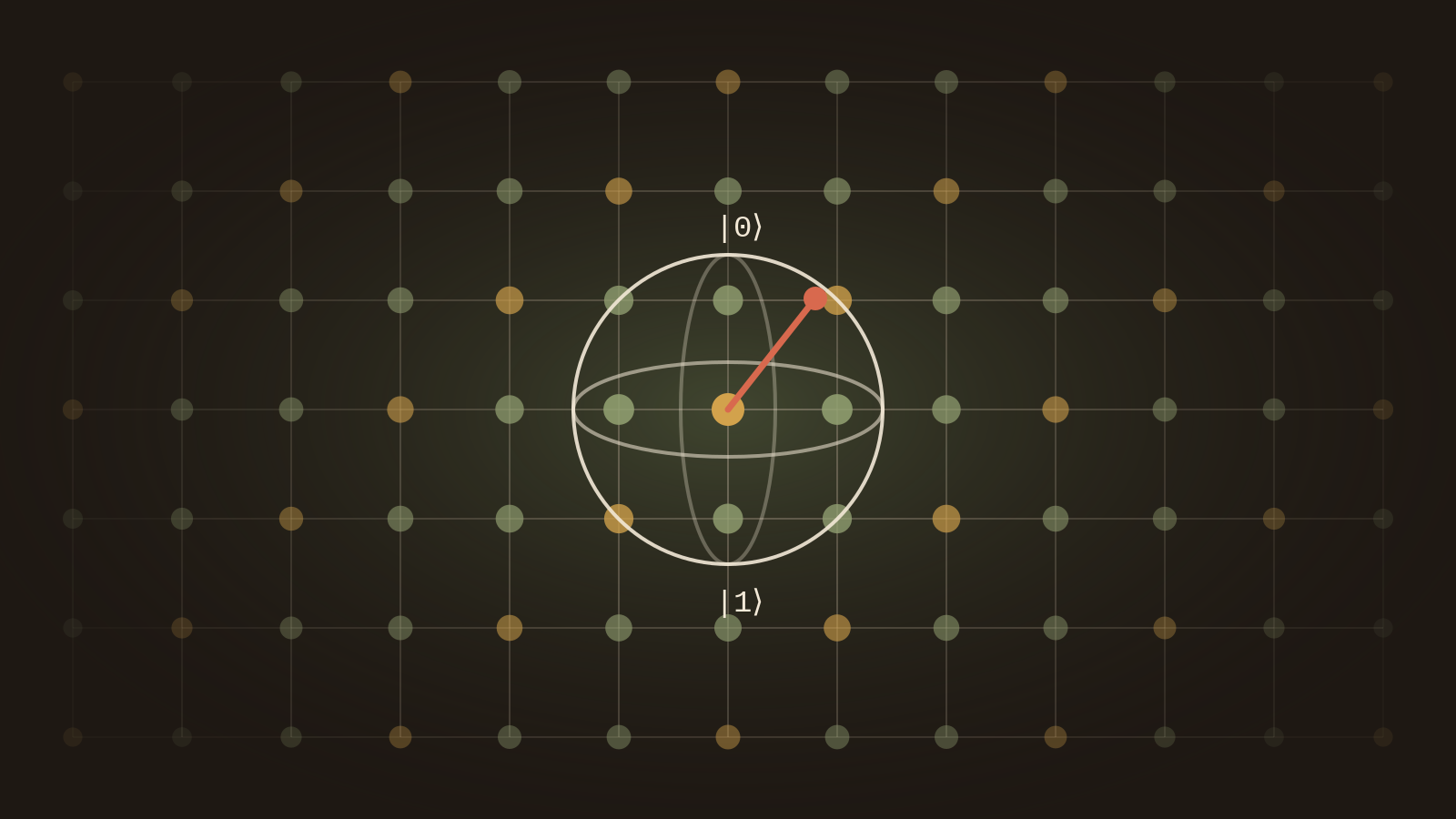
A quantum computer has been used to design an improved quantum bit, or qubit, that could power the next generation of quantum computers. Using the new qubit, it should be possible to build quantum computers that are smaller, higher-performance and more reliable.
As classical computer chips became more complex, it quickly became impractical to design them manually. For decades, it has instead been commonplace to use computers themselves to help optimise new chip designs for the next generation of computers.
But it is unfeasible to simulate the operation of all but the simplest quantum processor inside a classical computer. This is because the computing resources required grow exponentially as each new qubit is added.
Now, Chao-Yang Lu at the University of Science and Technology of China and his colleagues have used a quantum algorithm to run the simulations.
So far, the research has led to the development of a new type of qubit, the quantum version of a classical bit, which can exist in a mixture of a 0 and 1 state until it is measured and settles on one.
The new qubit, dubbed a plasonium, is smaller, less noisy and able to retain its state longer than the group’s current qubit design. The team believes that the work opens the way to designing advanced quantum processors using existing quantum machines.
Peter Knight at Imperial College London says the concept is intriguing and also intuitive. “If you think about a classical machine that’s trying to simulate a quantum processor, it’s hard work. So it’s obvious that once you’ve got a quantum processor, you’d see if you can use it for that purpose. Already it’s given them some new insights.”
Knight says that the new qubit design offers advantages but also, crucially, reduces several inconvenient features of current generation circuits.
To invent the plasonium, the team used an algorithm called a variational quantum eigensolver, which is often used in quantum chemistry to calculate the energy levels of molecules. This allowed the group to simulate the behaviour of particles in quantum circuits and iron out negative properties while developing positive features, all while avoiding the laborious process of building vast numbers of physical prototypes.
The plasonium qubits are each only 240 micrometres long, which is just 40 per cent of the size of the team’s current generation qubit design, called a transmon. This means that replacing transmon qubits with plasonium qubits will allow today’s large processors to be miniaturised. This will be key because future quantum computers will need to scale up from containing dozens of qubits, as most do today, to having the millions or billions required to carry out useful tasks.
Reducing “noise” in quantum computers is another vital hurdle between current machines and more powerful, useful quantum computers. Crucially, the plasonium is also less noisy than the group’s existing transmon qubit. In a classical computer, noise can come from a “bit flip” when a single bit encounters an error, generally caused by interaction with a stray charged particle passing through the computer. It is possible to reduce this problem in the design stage of a classical bit, but designing out similar noise issues in a quantum bit has been challenging. The new approach makes it easier.
Word bank
not sensible or realistic to do, usually because it is too difficult or expensive
“It became impractical to design chips by hand.”
≈ unworkable, unrealistic
happening often; not unusual
“Computer-aided design is now commonplace.”
≈ routine, standard, widespread
not possible to do in practice
“Simulating large quantum processors is unfeasible.”
≈ impossible, impractical
increasing faster and faster as something grows
“The resources required grow exponentially.”
≈ rapidly, dramatically
given a particular name or nickname
“The new qubit, dubbed a plasonium, is smaller.”
≈ named, called, nicknamed
very interesting because it is unusual or unexpected
“Knight finds the concept intriguing.”
≈ fascinating, compelling
easy to understand without needing explanation
“Using a quantum computer to design one feels intuitive.”
≈ natural, instinctive, obvious
needing a lot of time and effort
“Building prototypes one by one is laborious.”
≈ painstaking, arduous, tedious
a first model of something, used for testing before it is made in quantity
“The team avoided building physical prototypes.”
≈ model, trial version
to make a much smaller version of something
“The new qubit lets processors be miniaturised.”
≈ shrink, scale down
a problem or difficulty that must be overcome
“Noise is another vital hurdle.”
≈ obstacle, barrier, challenge
moving away from where it should be; random and unwanted
“A stray particle can cause a bit flip.”
≈ random, errant
Read aloud
/KYOO-bit/
Syllables: qu-bit
💡 Stress KYOO, like the letter Q.
/pla-ZOH-nee-um/
Syllables: pla-so-ni-um
💡 Stress ZOH.
/EYE-gun-sol-ver/
Syllables: ei-gen-sol-ver
💡 Stress EYE; 'eigen' is German for 'own'.
/ek-spoh-NEN-shuh-lee/
Syllables: ex-po-nen-tial-ly
💡 Stress NEN.
/luh-BOR-ee-us/
Syllables: la-bo-ri-ous
💡 Stress BOR.
/MY-kroh-mee-terz/
Syllables: mi-cro-me-tres
💡 Stress MY.